High Court nullifies Ruto’s special team on victims’ compensation, affirms KNCHR mandate
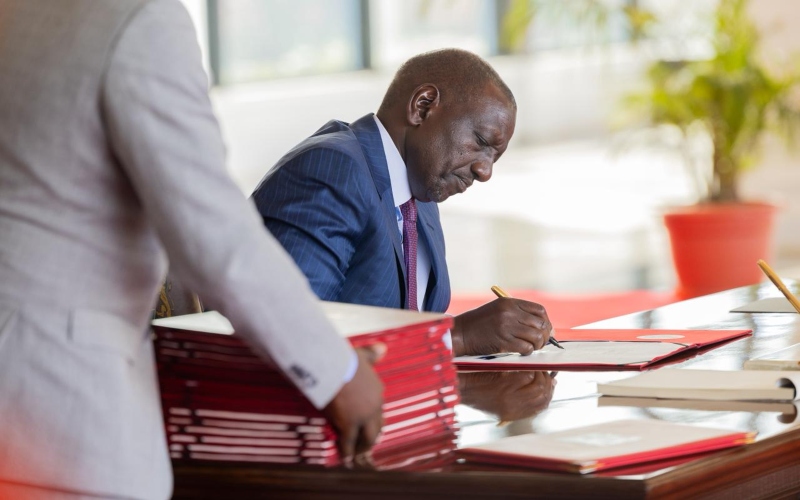
The court held that the President acted outside the bounds of the Constitution when he established the advisory body, noting that the framework for addressing victims' claims is already set out in law and specifically places the responsibility on KNCHR.
The High Court has invalidated President William Ruto's decision to assemble a special team to advise on compensation for victims of past violations, ruling that such authority is constitutionally reserved for the Kenya National Commission on Human Rights (KNCHR).
In a detailed judgment, the court held that the President acted outside the bounds of the Constitution when he established the advisory body, noting that the framework for addressing victims' claims is already set out in law and specifically places the responsibility on KNCHR.
More To Read
- Court strikes out LSK President Faith Odhiambo from consolidated rights petitions
- Ruto appoints KNCHR boss Claris Ogangah as Vice Chair of Protest Victims Compensation Panel, replacing LSK's Faith Odhiambo
- Claris Ogangah sworn in as new KNCHR chair, vows to defend rights of all Kenyans
- LSK urges court to dismiss appeal over protest victims’ compensation panel
- Wajir West MP criticises government for excluding Wagalla Massacre victims from compensation plan
- Panel on protest victims compensation moves to overturn orders freezing its operations
According to the court, any attempt by the Executive to duplicate or reassign that mandate undermines institutional independence and disrupts the constitutional architecture governing human-rights protection.
The petitioners had argued that the presidential team lacked legal grounding and risked interfering with ongoing processes managed by statutory bodies.
The State, however, defended the move as a necessary administrative step aimed at expediting compensation and providing technical guidance. The judges rejected that argument, saying that good intentions cannot cure a constitutional defect.
In its findings, the bench emphasised that "KNCHR is the only body empowered to initiate, coordinate and oversee measures relating to the identification of victims, assessment of harm, and recommendation of appropriate compensation."
The court stressed that involving parallel entities, particularly those constituted through presidential proclamations, introduces confusion and opens the door to unlawful executive influence in matters requiring independence and impartiality.
As part of its orders, the court directed that the report prepared by the presidential advisory team be immediately transferred to KNCHR.
"The commission has been instructed to review the document, evaluate its compliance with constitutional requirements, and make any changes necessary to align the process with its statutory mandate."
KNCHR has been given 30 days to undertake the required adjustments. The court warned that failure to act within the stated period will automatically invalidate the contested proclamations, effectively nullifying the existence of the advisory body.
The ruling is expected to have significant implications for the State's broader approach to victims' compensation and transitional justice initiatives.
Other Topics To Read
- Headlines
- National
- Kenya National Commission on Human Rights
- Framework for Compensation of Victims of Protests and Riots
- Panel of Experts on Compensation of Victims of Demonstrations
- Panel of Experts on Compensation of Victims
- Compensation of Victims
- High Court nullifies Ruto’s special team on victims’ compensation
- affirms KNCHR mandate
Top Stories Today